
Car Registration Documents — Maryland
Free to compare
What You Need at the MVA Counter
You bought a car and drove to the MVA to register it, only to discover the clerk needs four separate documents you don't have with you. One missing piece sends you home. Maryland's registration process requires proof of ownership, proof of insurance, proof the car meets emissions standards, and proof the VIN matches the title — and each proof lives in a different document.
The registration checklist exists to confirm the car is yours, insured to Maryland's minimum liability limits, emissions-compliant if applicable, and correctly identified. The MVA will not register a vehicle until every document on the list clears. This article walks the exact checklist, names what each document proves, and tells you where to get the ones you're missing before you drive to the MVA.
“Missing any one document stops the registration. The MVA will not accept partial applications or hold your place while you retrieve a missing form.”

Meet Maryland's Requirements Without Overpaying
Get My Maryland Car Insurance Quote$30,000/$60,000/$15,000
Maryland Minimum Liability Limits
Maryland requires every registered vehicle to carry at least $30,000 bodily injury per person, $60,000 bodily injury per accident, and $15,000 property damage. Your insurance card must show these minimums or higher, or the MVA will not accept it as proof.
Maryland Insurance Administration
The Four Core Documents Maryland Requires
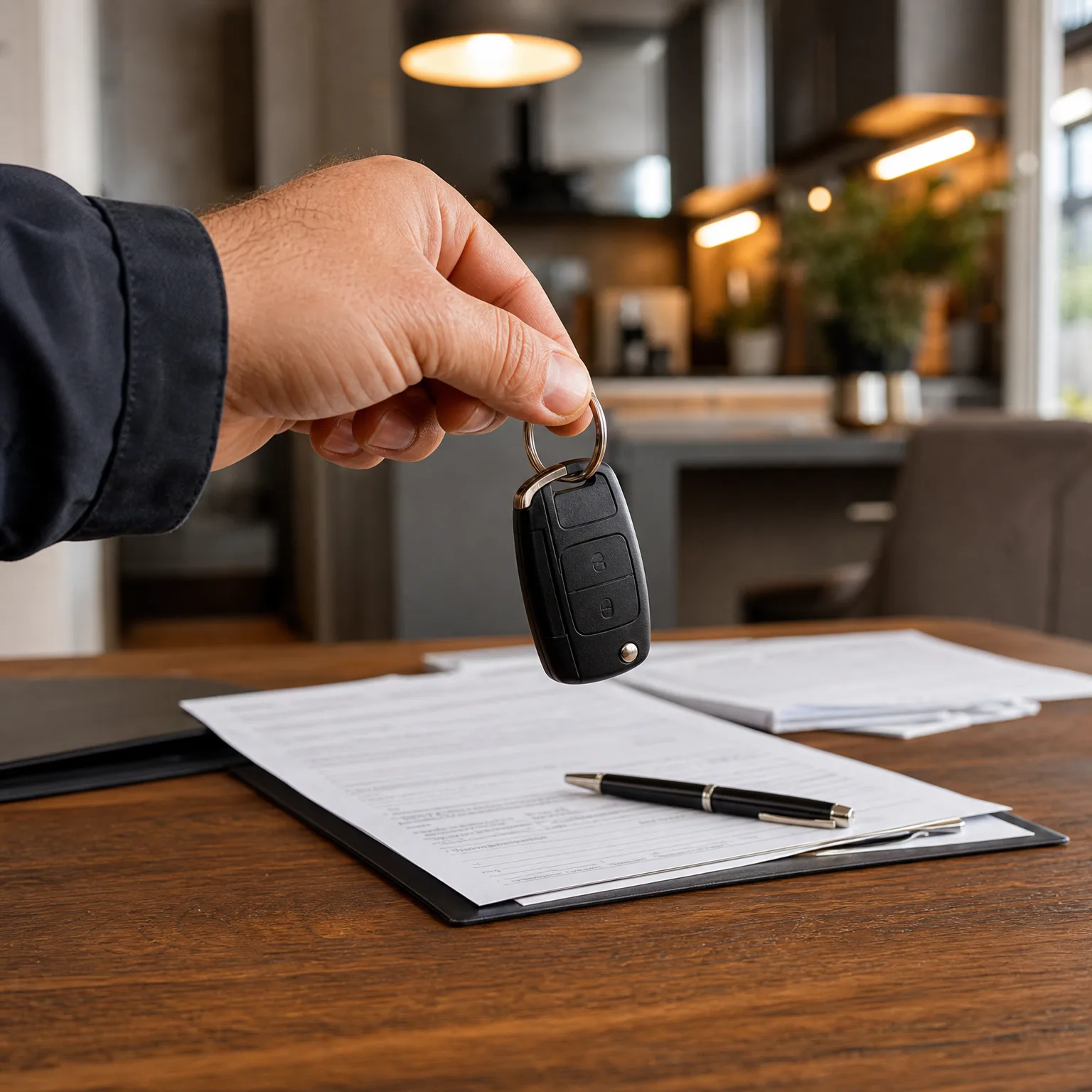
Maryland's registration checklist has four mandatory documents. First: the vehicle title, signed by the seller and showing your name as buyer. The title proves you own the car. If the seller has not yet mailed the title, or if a lien exists, you need the lienholder's release or a power-of-attorney form from the lender authorizing registration.
Second: proof of insurance meeting Maryland's minimum liability limits. The MVA accepts an insurance card, a binder letter from your carrier, or an FR-19 certificate filed electronically by the carrier. The document must show coverage effective the day you register. A lapsed or future-dated card will be rejected.
Third: a passed emissions inspection certificate, if the vehicle is model-year 2008 or newer and registered in one of Maryland's emissions counties. The certificate proves the car meets air-quality standards. If you bought the car out of state or from a private seller, you must take it to a Maryland emissions station before registering.
Fourth: a VIN verification form completed by a Maryland-licensed dealer, MVA inspector, or law enforcement officer. The form proves the VIN on the car matches the VIN on the title. If you bought from a Maryland dealer, they provide this form at sale. If you bought privately or out of state, you must schedule a VIN inspection at an MVA office or police station before registering.
Missing any one document stops the registration. The MVA will not accept partial applications or hold your place while you retrieve a missing form.
Related Articles



Emissions and VIN Verification Requirements
Maryland requires emissions testing for vehicles model-year 2008 or newer registered in Anne Arundel, Baltimore, Calvert, Carroll, Charles, Frederick, Harford, Howard, Montgomery, Prince George's, and Baltimore City. If your car falls into this category, you must pass an emissions test at a Maryland inspection station before the MVA will register it. The station prints a certificate showing pass or fail. Bring the certificate to the MVA — the clerk will not register the car without it.
If you bought the car from a Maryland dealer, the dealer typically handles emissions testing before delivery. If you bought privately or out of state, you must take the car to a station yourself. Stations charge a test fee; a failed test requires repairs and a retest before you can register. If the car is model-year 2007 or older, or if you're registering in a county outside the emissions zone, skip this step.
VIN verification proves the vehicle identification number stamped on the car matches the VIN on the title. Maryland-licensed dealers complete this form at sale. If you bought privately or out of state, you must schedule a VIN inspection. MVA offices offer walk-in VIN verification during business hours; some police departments also provide the service. Bring the car, the title, and a photo ID. The inspector compares the dashboard VIN to the title, signs the form, and hands it back. The form is valid for 30 days.
4,919,054
Registered Vehicles in Maryland
Maryland had 4,919,054 registered motor vehicles as of 2022. Every one required proof of insurance, title, and compliance documentation at registration. The MVA processes thousands of registrations daily, and incomplete applications are the most common delay.
Federal Highway Administration, 2022
What Happens If You're Missing a Document
The MVA will not register a vehicle with incomplete documentation. If you arrive without one of the four core documents, the clerk will return your application and tell you to come back when you have everything. The MVA does not hold your place in line or reserve your application. You start over.
If the title is missing, contact the seller or lienholder immediately. Out-of-state titles can take weeks to arrive by mail. If the seller cannot produce the title, you may need to file for a duplicate title in the seller's state before Maryland will register the car. If proof of insurance is missing, call your carrier and ask them to email or fax an insurance card or binder letter showing today's date. If the FR-19 has not yet been filed electronically, the carrier can expedite it, but electronic filing can take 24 to 48 hours to appear in the MVA system.
If the emissions certificate is missing, locate a Maryland emissions inspection station, take the car in, and request a test. If the car fails, you must repair the issue and retest before registering. If VIN verification is missing, schedule an MVA walk-in inspection or visit a police station that offers the service. Bring the car, the title, and your ID. The form is valid for 30 days, so you can complete this step in advance.
Registering a Car You're Adding to an Existing Policy
If you already insure one or more vehicles in Maryland and you're adding a second or third car, the insurance-proof step is simpler but still requires attention. Most carriers extend coverage to a newly-acquired vehicle for a limited grace period — typically 14 to 30 days — but the grace period does not satisfy the MVA's proof-of-insurance requirement. You must formally add the new car to your policy and obtain an updated insurance card or FR-19 showing the new VIN before the MVA will register it.
Call your carrier the day you buy the car, provide the VIN, and ask them to add the vehicle and issue a new card. If the carrier files FR-19 certificates electronically, confirm they have submitted the updated certificate to the MVA. If you register the car within 24 hours of adding it to your policy, bring a printed card as backup in case the electronic filing has not yet processed. The MVA clerk needs proof the car is on your policy today, not proof it will be covered under a grace period.
Bring Every Document the First Time
Assemble the full checklist before you drive to the MVA: signed title, proof of insurance meeting Maryland's $30,000/$60,000/$15,000 minimums, emissions certificate if applicable, and VIN verification. Missing one document stops the process and sends you home. If you're adding a car to an existing multi-vehicle policy, confirm your carrier has updated your insurance card or filed the FR-19 electronically before you go. Maryland's registration system does not bend for incomplete applications. Bring everything the first time, and the clerk will process your registration on the spot.
How to Get Proof of Insurance the MVA Accepts
An insurance card from your carrier showing your name, the vehicle VIN, coverage effective date, and liability limits at or above Maryland's minimums is the simplest proof. The card must be current — the effective date must be today or earlier, and the expiration date must be in the future. A card showing future coverage or expired coverage will be rejected. If you just bought the policy, ask your carrier to email or print a card showing today's date as the effective start.
An FR-19 certificate is Maryland's electronic insurance-verification form. Many carriers file FR-19 certificates directly with the MVA when you add a vehicle to your policy. If your carrier filed electronically, the MVA clerk can pull the certificate from the system using your name and VIN. If the carrier has not yet filed, or if you bought the policy within the past 24 hours, the electronic record may not appear — bring a printed card as backup. A binder letter from your carrier on company letterhead stating coverage is bound and effective also works, but only if it lists the VIN, your name, and the liability limits.
Get Your Free Quote
Get My Maryland Car Insurance QuoteFrequently Asked Questions
Can I register a car in Maryland without proof of insurance?
No. Maryland requires proof of insurance meeting the state's minimum liability limits before the MVA will register a vehicle. You must bring an insurance card, FR-19 certificate, or binder letter showing coverage effective the day you register.
What is an FR-19 certificate?
An FR-19 is Maryland's electronic insurance-verification form. Many carriers file FR-19 certificates directly with the MVA when you add a vehicle to your policy. The MVA clerk can pull the certificate from the system using your name and VIN.
Do I need an emissions test to register a car in Maryland?
You need an emissions test if the vehicle is model-year 2008 or newer and you're registering it in one of Maryland's emissions counties. The test must be completed at a Maryland inspection station before the MVA will register the car.
How do I get a VIN verification in Maryland?
MVA offices offer walk-in VIN verification during business hours. Some police departments also provide the service. Bring the car, the title, and a photo ID. The inspector compares the dashboard VIN to the title and signs the form.
What happens if I show up at the MVA without all the documents?
The MVA will return your application and tell you to come back when you have everything. They do not hold your place in line or reserve your application. You start over when you return with the missing documents.
Can I use my out-of-state insurance card to register a car in Maryland?
Only if the card shows liability limits at or above Maryland's minimums and lists the vehicle VIN. Most out-of-state cards work, but if your limits are below $30,000/$60,000/$15,000, you must increase coverage before registering.