
Progressive Multi-Car Insurance — Maryland
Free to compare
Progressive Multi-Vehicle Coverage in Maryland
You own two or more vehicles in Maryland, you're comparing carriers that write multi-car policies, and Progressive's name keeps appearing in your search results. You want to know whether Progressive's multi-vehicle discount, policy structure, and household-coverage rules make it the right fit for insuring your cars — or whether another carrier in Maryland's 24-carrier roster offers better terms for your situation.
Progressive writes standard-tier auto insurance in Maryland with online quoting, SR-22 filing capability, non-owner policies, and coverage for drivers with DUI history. The carrier holds an AM Best A+ rating and operates as NAIC company 24260. What matters for a multi-car household: Progressive offers a multi-vehicle discount, but that discount applies only when every vehicle sits on the same policy and shares a garaging address. Maryland's mandatory uninsured-motorist coverage and personal-injury-protection requirements set the baseline premium every carrier starts from — Progressive's discount reduces that baseline, but the state-mandated coverages mean your floor cost is higher than in states without those mandates.
“Progressive's multi-car discount applies after Maryland's uninsured-motorist and PIP mandates are priced in — a smaller discount on a higher baseline can still cost more than expected.”

Meet Maryland's Requirements Without Overpaying
Get My Maryland Car Insurance Quote24 carriers
Maryland Multi-Car Roster
Twenty-four carriers write auto insurance in Maryland as of the current state roster, including Progressive, State Farm, GEICO, Allstate, and 20 others. Not all write multi-vehicle policies with the same discount structure or household-vehicle rules — some require shared garaging, some allow separate addresses for titled owners, and some restrict the number of vehicles per policy.
Maryland Insurance Administration carrier licensing data
How Progressive's Multi-Car Discount Works
Progressive's multi-vehicle discount applies when you insure two or more vehicles on a single policy. The discount is not a flat percentage — it varies by the number of vehicles, the coverage levels you select for each car, and your household's driving profile. The critical structural rule: every vehicle receiving the discount must be listed on the same policy and garaged at the same address. A car titled to a household member but garaged elsewhere, or a vehicle you own but keep at a second property, does not qualify for the same-policy discount unless you can demonstrate shared garaging.
Maryland requires every auto policy to include uninsured-motorist coverage and personal-injury-protection coverage in addition to the state's liability minimums of $30,000 per person, $60,000 per accident for bodily injury, and $15,000 for property damage. Progressive's multi-car discount reduces the combined premium for all vehicles on the policy, but it applies after the state-mandated coverages are priced in. A smaller discount on a policy that includes UM and PIP can still cost more than a larger discount on a policy in a state without those mandates.
When you add a vehicle to an existing Progressive policy, the entire policy re-rates. The new vehicle's premium is not simply added to your current bill — Progressive recalculates the discount across all vehicles, adjusts the household risk profile, and reprices every car on the policy. This can raise your total premium more than you expect if the new vehicle is higher-risk, driven by a younger household member, or carries comprehensive and collision coverage when your other cars do not.
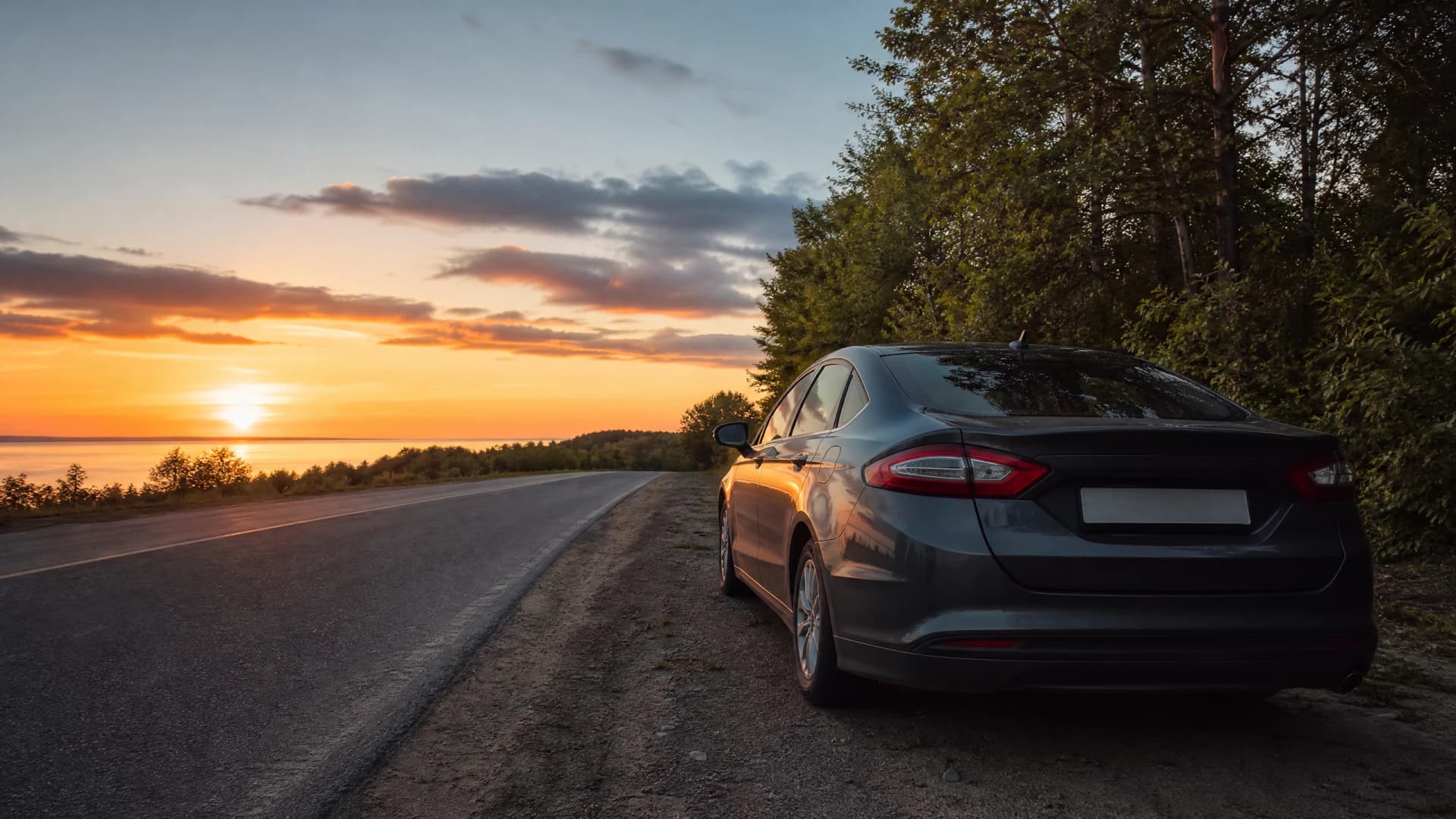
Progressive's multi-car discount requires shared garaging. A vehicle titled to you but kept at a different address may not qualify unless you can prove it returns to the policy's garaging location.
Related Articles






When Progressive's Multi-Car Policy Fits Your Household
Progressive's multi-vehicle discount fits households where every car is titled to the same policyholder or to household members living at the same address, where all vehicles are garaged at the policy address, and where no driver on the policy has a violation or coverage gap that pushes the household into non-standard tier. If you own three cars, all titled to you, all kept at your home, and you carry liability-only on one and full coverage on the other two, Progressive's online quoting and same-policy discount structure make it a strong comparison candidate.
Progressive does not fit every multi-car situation. A household where one spouse owns two cars titled and garaged at the family home, and the other spouse owns a car titled to them but garaged at their workplace 40 miles away, may not qualify for the multi-car discount on all three vehicles — the workplace-garaged car may need its own policy. A household where an adult child living at college owns a car titled to them and garaged at school does not qualify for the parent's multi-car discount unless the child is listed as a household member and the car's garaging address matches the policy address.
Maryland's uninsured-motorist and PIP mandates mean Progressive's base premium starts higher than it would in a state without those requirements. The multi-car discount reduces that baseline, but it does not eliminate the cost of the state-mandated coverages. If your goal is the lowest possible premium for multiple vehicles and you are willing to carry only the state minimums, compare Progressive's discounted rate against carriers that specialize in minimum-coverage policies — some non-standard carriers write liability-only multi-car policies at lower base rates even without a named multi-vehicle discount.
$30,000 / $60,000 / $15,000
Maryland Liability Minimums
Maryland requires $30,000 per person and $60,000 per accident for bodily injury liability, plus $15,000 for property damage. Every policy must also include uninsured-motorist coverage and personal-injury-protection coverage. These mandates set the baseline premium every carrier prices from — Progressive's multi-car discount applies on top of this floor.
Maryland Insurance Administration

Adding or Removing a Vehicle on a Progressive Policy
When you add a vehicle to an existing Progressive multi-car policy, the carrier re-rates the entire policy within the same term. The new vehicle is covered immediately under Progressive's grace period — typically 30 days from the date of purchase or title transfer — but you must report the addition to Progressive within that window to maintain coverage. Missing the grace period can result in the new vehicle being excluded from coverage retroactively, which means a claim filed after the window closes may be denied even if the accident happened during the grace period.
Removing a vehicle from a Progressive multi-car policy also triggers a re-rate. If you sell one of three cars on the policy, Progressive recalculates the discount across the remaining two vehicles and adjusts your premium. The discount may shrink if the removed vehicle was low-risk or if the two remaining cars are higher-risk than the three-car average. Some households see their per-vehicle cost rise after removing a car, even though the total policy premium drops — the multi-car discount is smaller with two vehicles than with three, and that smaller discount applies to a higher per-vehicle base rate.
Compare Progressive and Maryland's Full Carrier Roster
Progressive is one option in a 24-carrier field. The next step: compare Progressive's multi-car rate and policy structure against other carriers writing your household's vehicle count, coverage needs, and driver profile. Maryland's roster includes preferred-tier carriers like State Farm and Amica, standard-tier carriers like GEICO and Nationwide, and non-standard carriers like Bristol West and The General — each structures its multi-vehicle discount differently, and the carrier with the lowest rate for one household may not be the lowest for another.
Use Maryland's carrier comparison tool to request quotes from multiple carriers at once. Enter your household's vehicle count, garaging address, driver ages, and coverage preferences, and compare the total premium each carrier quotes for all vehicles on one policy. The multi-car discount is only one variable — the base rate, the coverage-level pricing, and the household risk profile all affect your final cost. A carrier with a smaller advertised discount but a lower base rate can beat a carrier with a larger discount on a higher starting premium.
Comparing Progressive Against Maryland's Carrier Roster
State Farm, GEICO, and Allstate also write multi-car policies in Maryland with online quoting and multi-vehicle discounts. State Farm holds a preferred-tier rating and an AM Best A+, but requires every vehicle to be titled to a policyholder or resident household member — a car titled to an adult child living elsewhere does not qualify. GEICO operates in the standard tier with an AM Best A++ and writes SR-22, non-owner, and after-DUI coverage like Progressive, but GEICO's multi-car discount applies per vehicle rather than as a blanket policy reduction, which can produce different outcomes depending on how many cars you insure and what coverage levels you select for each.
Carriers in Maryland's non-standard tier — Bristol West, Dairyland, The General, and National General — write multi-vehicle policies for drivers Progressive may decline: multiple violations, suspended-license reinstatement cases, or households where one driver has a DUI and another does not. These carriers often charge higher base rates but offer multi-car discounts structured to reward adding a lower-risk vehicle or driver to offset a high-risk one. If your household includes both a clean-record driver and a driver with points, a non-standard carrier's discount structure may produce a lower combined premium than Progressive's standard-tier rate with a multi-car discount applied.
Get Your Free Quote
Get My Maryland Car Insurance QuoteFrequently Asked Questions
Does Progressive offer a multi-car discount in Maryland?
Yes. Progressive offers a multi-vehicle discount in Maryland when you insure two or more vehicles on the same policy. The discount applies only when every vehicle is garaged at the same address and listed on one policy — vehicles titled to household members but garaged elsewhere may not qualify.
How many vehicles can I insure on one Progressive policy in Maryland?
Progressive does not publish a hard cap on the number of vehicles per policy, but most households insure two to four cars on a single multi-car policy. If you own five or more vehicles, contact Progressive directly to confirm whether all can be added to one policy or whether a fleet or commercial policy is required.
Can I add a car titled to my adult child to my Progressive multi-car policy?
Only if your adult child lives at the same address as the policy's garaging location and is listed as a household member. A car titled to an adult child living elsewhere — at college, at their own home, or at a workplace — does not qualify for the same-policy multi-car discount unless the child is a resident household member and the car is garaged at your address.
Does Progressive's multi-car discount apply if I have one car with full coverage and one with liability only?
Yes. Progressive's multi-vehicle discount applies to the total policy premium regardless of the coverage levels you select for each car. You can carry comprehensive and collision on one vehicle and liability-only on another, and the discount still applies to the combined premium for both cars.
How does adding a third vehicle to my Progressive policy change my premium?
Adding a third vehicle triggers a full policy re-rate. Progressive recalculates the multi-car discount across all three vehicles, adjusts the household risk profile, and reprices every car on the policy. Your total premium will rise, but the per-vehicle cost may drop if the third car is low-risk and increases the discount percentage.
What happens if I miss Progressive's grace period for adding a new vehicle?
If you do not report a newly purchased or titled vehicle to Progressive within the carrier's grace period — typically 30 days — the vehicle may be excluded from coverage retroactively. A claim filed after the grace period expires can be denied even if the accident happened during the window, because the vehicle was never formally added to the policy.
Can I get a multi-car discount from Progressive if one driver on my policy has a DUI?
Yes. Progressive writes after-DUI coverage in Maryland and offers multi-vehicle discounts to households where one or more drivers have a DUI conviction. The DUI will raise the base premium for the driver and may affect the household's overall rate, but the multi-car discount still applies to the total policy premium.